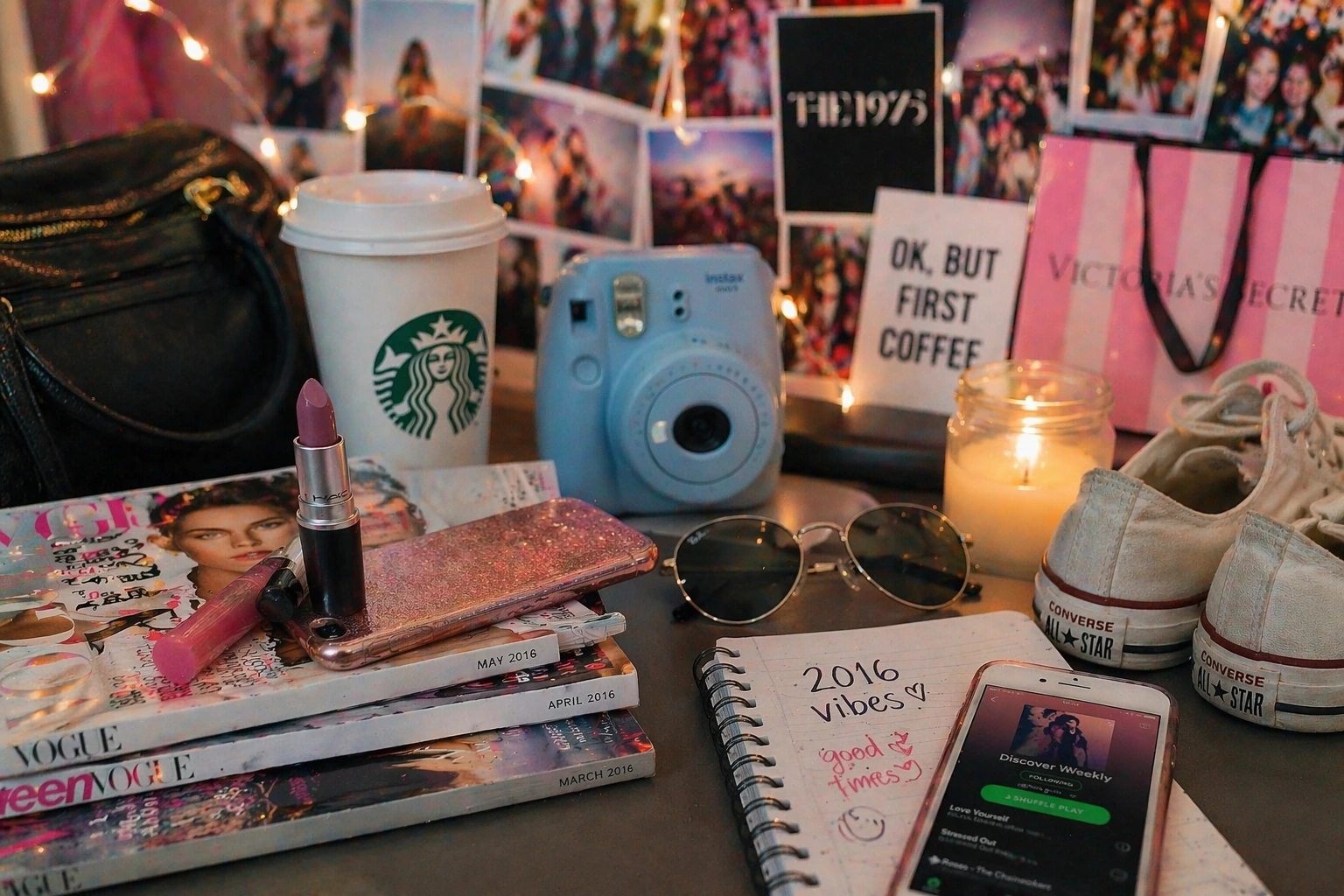
Something unusual has been happening across social media in 2026: people keep talking about 2016 as if it was a lost paradise. The memes are everywhere, the throwback edits are multiplying, and what started as a funny internet trend has become a real lifestyle conversation. According to The Washington Post, there has been a visible wave of nostalgia for 2016, especially around its music, beauty trends, fashion, and the feeling that it represented the last stretch of “shared” pop culture before digital life became more fragmented and exhausting. Vogue also reported in January that “2016 is trending” in 2026, with social users romanticizing the year as the “last moment of true mass culture.”
At first glance, the obsession sounds strange. After all, 2016 was not exactly a peaceful year in political or global terms. But nostalgia rarely works like a history lesson. It works emotionally. What people seem to miss is not every real event of that year, but the texture of how life felt around it: the music, the celebrity culture, the fashion, the internet tone, and the sense that everyone was still watching, wearing, and reacting to many of the same things at the same time. Both The Washington Post and Vogue note that what people are really longing for is a more unified and less chaotic cultural atmosphere than the one many feel today.
That helps explain why 2016 nostalgia is showing up in so many lifestyle areas at once. Fashion is one of the clearest examples. Vogue reported in January that several unmistakable 2016 trends are already making a comeback in 2026, including skinny jeans, ankle boots, ballet flats, and accessories associated with the mid-2010s silhouette. The same publication has also covered the revival of indie sleaze and boho-coded looks, both of which feed into the wider return of a freer, messier, more personal aesthetic that many people now associate with the pre-over-optimized internet.
Beauty is part of it too. The Washington Post specifically pointed to makeup trends from 2016, including matte lips and sharper, more defined looks, as part of what people are remembering so vividly. But again, the pull is not only about copying the old style exactly. It is about revisiting an era that now feels emotionally distinct — a time when trends felt more collective, celebrity influence felt bigger, and internet culture felt less fractured into endless micro-audiences.
Music and pop culture may be the strongest drivers of all. One reason 2016 lingers so powerfully is that it gave people moments that felt massive and shared: blockbuster albums, instantly recognizable celebrity aesthetics, and pop culture events that seemed to dominate everyone’s feed at once. Vogue argues that this is central to the comeback: people are not just revisiting old outfits, they are craving the emotional experience of mass attention and shared excitement that defined that moment.
There is also a deeper reason this nostalgia has landed so hard in 2026. Forbes reported that the “2016 is the new 2026” trend is thriving on TikTok and Instagram, where users are collectively framing that year as a “good times” benchmark. Another Forbes piece argued that the 2016 nostalgia boom is less about music alone and more about fatigue — especially millennial and broader cultural fatigue after years of pandemic fallout, work pressure, social media overload, and nonstop bad news. In that reading, nostalgia becomes less of a joke and more of a coping mechanism.
That may be why the trend feels so emotional rather than merely stylish. People are not just saying, “I miss those shoes,” or “I want that makeup back.” They are really saying something closer to: I miss when life felt lighter, when the internet felt more human, when trends felt less manufactured by algorithms, and when culture still seemed to gather in the same room. That is an inference, but it is strongly supported by the way The Washington Post, Vogue, and Forbes all describe the trend as tied to emotional tone, cultural unity, and burnout from the present.
Of course, nostalgia always edits reality. 2016 was not actually simple. It only looks simpler from the distance of a more anxious and overstimulated present. That is exactly why it feels so attractive now. When people are overwhelmed, they often do not long for perfection. They long for a version of the past that feels easier to hold in the mind. In 2026, 2016 has become that symbol: not because it was flawless, but because it now represents a cultural mood that many people feel has disappeared.
In the end, the 2016 revival is about much more than throwback photos. It is about collective longing. It is about the desire for culture to feel fun again, for style to feel personal again, and for the internet to feel less cold and automated. That is why people keep rewinding to that year. They are not only chasing old trends. They are chasing an old feeling.