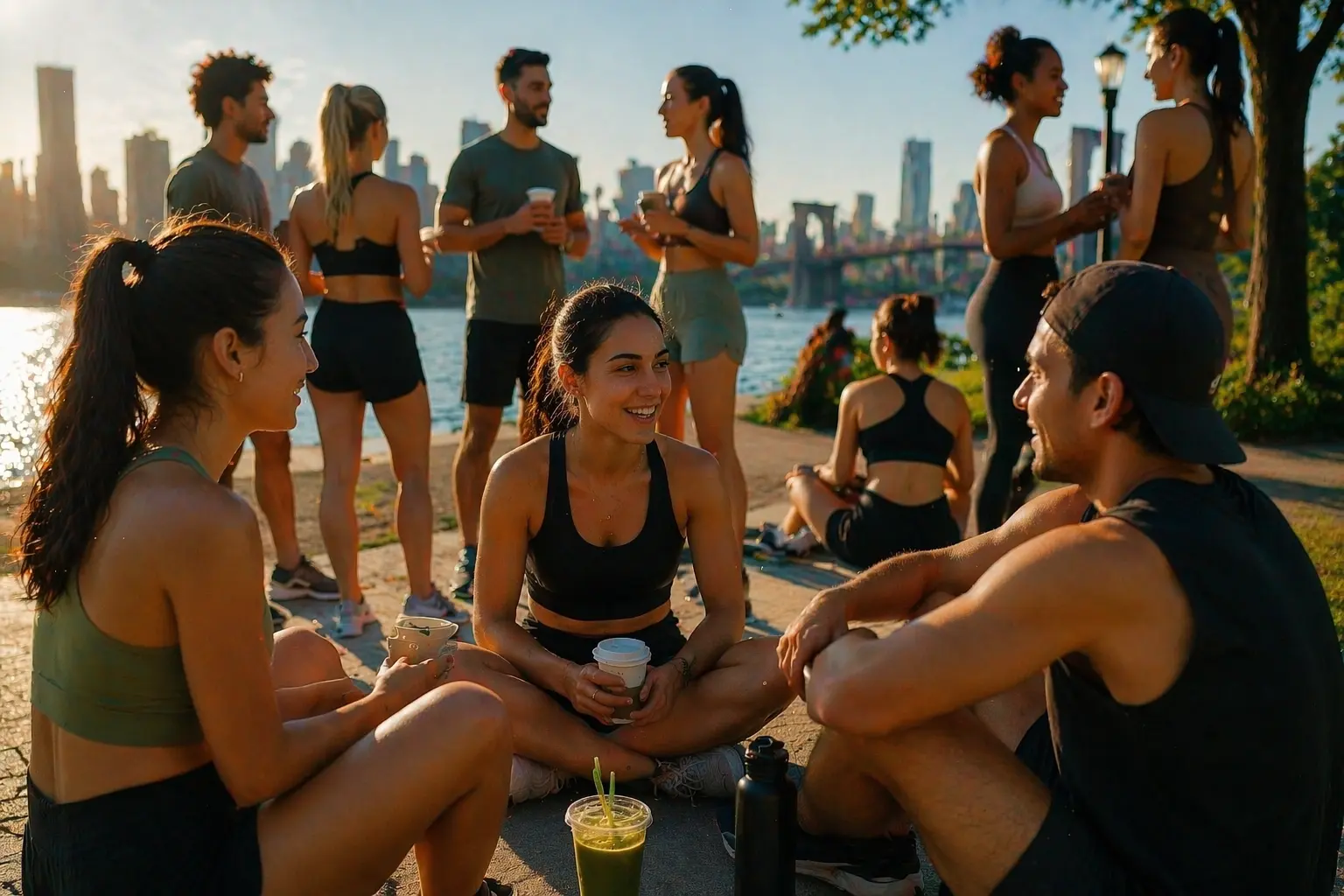
For years, going out usually meant one thing: drinks. Happy hour, bar nights, cocktails after work, weekend partying — alcohol sat at the center of modern social life for so long that many people barely questioned it. But that script is changing fast. In 2026, one of the clearest lifestyle shifts is the rise of sober socializing: run clubs, group fitness classes, wellness meetups, cold-plunge gatherings, coffee events, and community spaces built around connection rather than drinking. Business Insider recently described this as the year of “soft partying,” where younger adults are swapping traditional nightlife for daytime, alcohol-light, or alcohol-free social experiences.
A big reason for this shift is generational. Younger adults are drinking less than previous age groups, and not just temporarily. Business Insider reported that in 2025, 22% of American adults said they planned to take part in Dry January, a record high, while Gen Z was already drinking less than older generations year-round. The same reporting cited an Eventbrite study showing that one in five adults under 35 were interested in alcohol-free events. Circana’s 2025 “Sober Curious Nation” survey also found that nearly two in three Gen Z consumers planned to drink less in 2025, with 39% saying they intended to stay dry not just in January but throughout the year.
That does not mean people have stopped wanting fun or community. It means they are looking for those things in a different form. The new social scene is often more structured, more active, and more intentional. Instead of meeting at a bar and hoping the night becomes memorable, people are joining run clubs, signing up for Pilates, attending workout socials, or going to wellness events where the activity itself creates the bond. Business Insider pointed to communities like SweatPals and “Coffee and Chill,” a cold-plunge social club, as examples of how younger adults are building a new kind of social life around energy, wellness, and shared experiences rather than alcohol.
Run clubs are a particularly strong symbol of the shift. They offer almost everything people once looked for in nightlife: identity, ritual, excitement, flirtation, community, and a reason to show up regularly. Recent reporting on the run-club boom described them as an all-in-one social outlet for friendship, dating, fitness, and fun, fueled partly by the desire for real-world connection after years of isolation and partly by a broader turn away from alcohol.
Group classes work in a similar way. They are not just workouts anymore. They are social containers. A spin class, strength class, Pilates session, yoga flow, or boot camp can create the same kind of emotional lift people used to associate with going out — music, movement, laughter, familiar faces, and the feeling of being part of something. The difference is what comes after. Instead of waking up drained, people often leave feeling sharper, calmer, and better in their bodies. That outcome matters in a culture where mental wellness, sleep, and recovery are becoming just as important as entertainment. This trend is also visible internationally: a recent report covered by The Guardian found that Gen Z gym participation is rising sharply, with gyms increasingly functioning as social hubs rather than purely fitness spaces.
There is also a practical reason sober socializing is catching on: traditional nightlife has become expensive. A few drinks, transportation, dinner, and a late-night stop can add up quickly, and for many younger adults that cost no longer feels worth it. By contrast, a class, run-club meetup, or wellness event often feels like a better investment — one that offers both a social return and a personal benefit. Business Insider’s reporting on “soft partying” frames this shift partly as a response to loneliness and changing priorities, with younger adults looking for lower-pressure ways to spend time together.
Another reason the movement feels so strong right now is that it is not built on restriction. It does not feel like punishment. It feels fresh. Sober social spaces are increasingly designed to be aspirational and enjoyable, not preachy. In Austin, for example, a sober-curious social club highlighted by regional reporting created alcohol-free gatherings centered on mingling, crafts, spa experiences, and wellness-oriented events, showing how this lifestyle has expanded far beyond the simple idea of “not drinking.”
This is also why the term “sober curious” has become so important. It leaves room for flexibility. Not everyone in this trend is fully sober. Some people are drinking less, others are choosing alcohol-free events more often, and some are mixing alcoholic and non-alcoholic options depending on the setting. Beverage industry reporting in early 2026 described “zebra striping” — alternating between alcoholic and non-alcoholic drinks in one occasion — as one of the year’s most talked-about habits, which suggests that moderation and intentionality are becoming more mainstream even among people who still drink sometimes.
At a deeper level, the rise of sober socializing reflects a broader change in what people now consider a good time. More and more, they want experiences that feel energizing rather than numbing, memorable rather than blurry, and socially rich without requiring recovery the next day. The old model of bonding through drinks is not disappearing completely, but it is clearly losing its monopoly. In its place, a wider social landscape is opening up — one where people meet over miles, mats, coffee, classes, wellness nights, and shared routines that make them feel more alive, not less.
That is why sober socializing is more than a passing trend. It fits the mood of the moment. People still want to connect, go out, meet new people, and be part of a scene. They just increasingly want to do it without the pressure to drink, without the cost of traditional nightlife, and without sacrificing how they feel the next day. In 2026, for a growing number of people, the new big night out may not start with a bar at all. It may start with a run, a class, or a coffee in a room full of people looking for the same thing: real connection, minus the hangover.