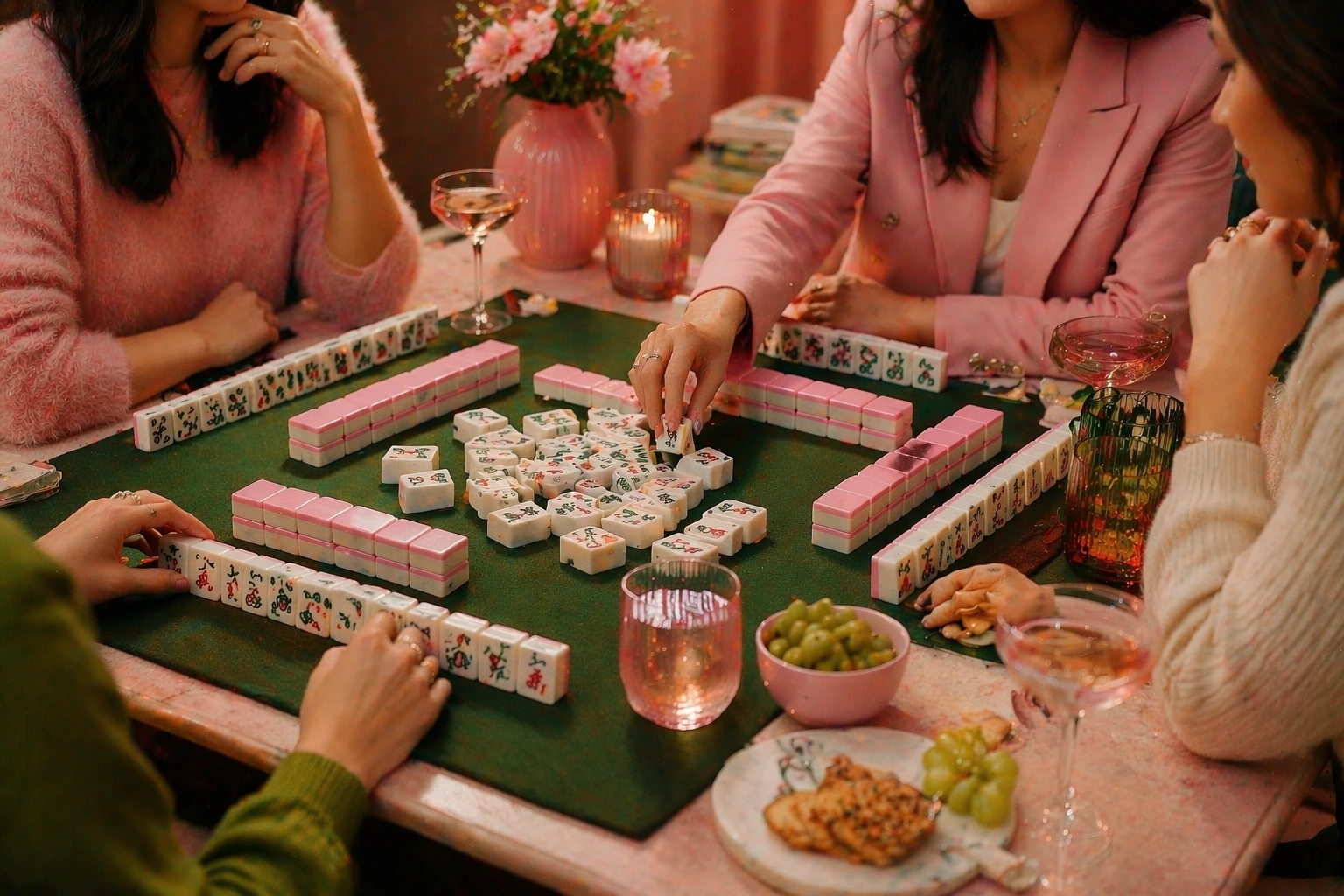
For a long time, mahjong carried a very specific stereotype in the American imagination. It was often seen as an older-generation pastime, something played in private homes, retirement communities, or family circles. But that image has changed dramatically. In 2026, mahjong is having a real social resurgence, showing up in bars, clubs, pop-ups, hotel events, fashion parties, and stylish group gatherings across major U.S. cities. The Wall Street Journal recently described America as “hooked on mahjong,” while Vogue reported that the game has been given a modern makeover through social clubs, designer sets, and buzzy New York events.
What makes the comeback so interesting is that mahjong is not returning as a quiet niche hobby. It is returning as a lifestyle. Yelp recently named it one of the top trends of 2026, with searches for mahjong clubs up 4,467% year over year and searches for lessons up 819%, according to reporting cited by ICSC. That kind of growth helps explain why the game is suddenly being talked about not just as a pastime, but as a whole social scene.
Part of the appeal is simple: people are hungry for social activities that feel real. Mahjong requires four people, attention, rhythm, conversation, and physical presence. It is strategic enough to stay interesting, but social enough to become a ritual. Forbes noted that mahjong naturally builds connection because the pace of the game leaves room for interaction and relationship-building, while the Associated Press described its rise among younger adults as part of a wider desire to unplug and connect in person.
That phone-free quality matters more than ever. In a world dominated by endless scrolling and distracted hangouts, mahjong offers something many people feel they are missing: focused time with others. The Wall Street Journal said players are drawn to the game’s social and phone-free nature, and the Associated Press similarly tied the trend to a broader desire for tactile, community-based experiences. In other words, mahjong is not just fun because it is old-school. It is fun because it creates the kind of atmosphere people increasingly crave now.
There is also a strong aesthetic and cultural layer to the comeback. Vogue highlighted the rise of designer boards, fashion-week mahjong activations, and stylish clubs in Manhattan, where the game has become part of a chic post-work ritual. Beautiful tiles, lacquered mats, curated venues, and well-dressed gatherings have helped make mahjong highly shareable online, but the visual appeal is only part of the story. Even Good Housekeeping notes that the boom is being driven by small businesses and clubs that are turning the game into a modern social experience.
Another reason mahjong is resonating is that it crosses generations in a way few trends do. Vogue emphasized that the game brings together people from different ages and backgrounds, while the Wall Street Journal described it as a cross-generational phenomenon rather than a single-age obsession. That makes the trend feel richer than many fast-moving social crazes. It can be fashionable and contemporary, but it also carries memory, family tradition, and continuity.
For many Asian American players and organizers, the revival has an even deeper meaning. The Associated Press reported that younger players are using mahjong not only as a social activity, but also as a way to reconnect with heritage and community. The Wall Street Journal likewise noted that the game has long symbolized cultural heritage in Chinese American communities and that this meaning remains important even as the trend expands into more mainstream lifestyle spaces.
At the same time, the boom has sparked real conversation about commercialization and cultural appropriation. The Wall Street Journal noted criticism around luxury-themed sets that replace traditional symbols with Western motifs, raising questions about what gets lost when a deeply rooted cultural game is repackaged as a fashion-forward accessory. That tension is part of the current moment too: mahjong’s popularity is opening doors, but it is also forcing people to think about respect, origins, and who benefits from cultural revival.
Still, the trend keeps growing because it satisfies several needs at once. It is social without being chaotic. It is stylish without requiring nightlife. It is mentally engaging without feeling isolating. It can happen in a speakeasy, at a community center, in a hotel lounge, or around a dining table. In San Francisco, the Associated Press reported on pop-up mahjong nights that now draw large, young crowds with waitlists and teaching staff for newcomers, showing just how adaptable the format has become.
That is why mahjong is starting to feel bigger than a comeback. It fits perfectly into the broader shift toward hobbies that are tactile, communal, and rooted in real presence. People still want to go out, meet others, and be part of a scene. But increasingly, they want to do it in ways that feel more intentional and less draining than traditional nightlife. Mahjong gives them exactly that: strategy, ritual, style, and connection in one place.
In the end, mahjong is not becoming popular again just because it looks good on a table. It is becoming popular because it offers something increasingly rare: a reason to gather, stay engaged, and actually be there. And in 2026, that may be one of the strongest social currencies of all.